

BEST IN BEAUTY

Letting go of jaw clenching

Jaw clenching is holding your molars together for a long time, usually during the day and almost always without you noticing. You only feel it when your jaw is stiff and tired at the end of the day. At Soap, our doctors assess during a free consult how tense your chewing muscle is.

Book a free consultBook a free consult
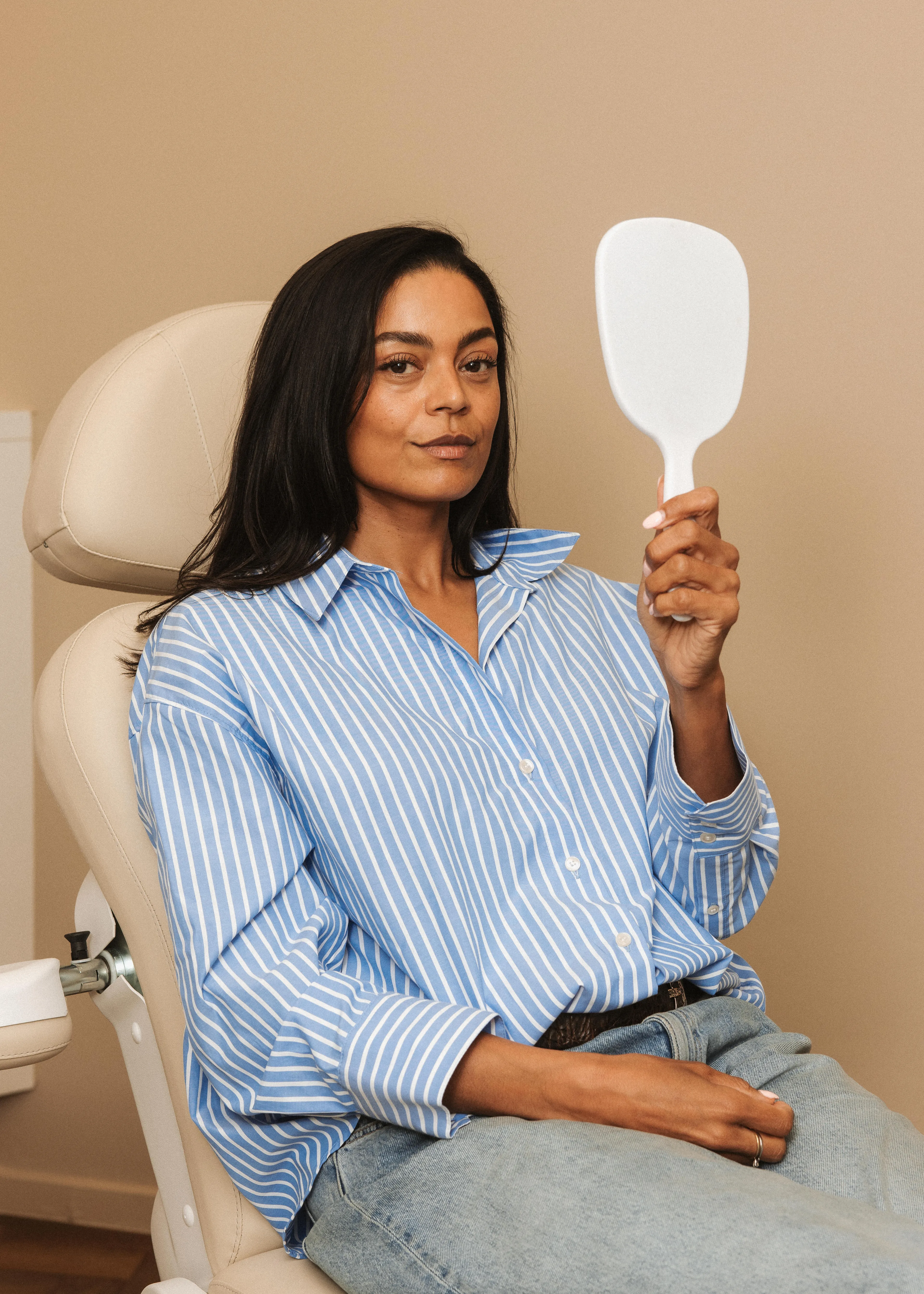
Een vrouw zit in een behandelstoel en houdt een handspiegel vast terwijl ze naar de camera kijkt.

CHECK YOUR JAW

How to tell you clench your jaw

Do the test while you read this: where is your lower jaw right now? At rest, there should be a few millimetres of space between your upper and lower teeth, with your tongue resting loosely against your palate. Were your molars touching? Then you probably clench more often than you think.

The symptoms come late in the day: a tired, stiff feeling around the angle of your jaw, a pressing pain towards your temples, sometimes a full or ringing feeling in your ear. Unlike grinding at night, nobody hears it, and you see less of it on your teeth too. That is exactly why jaw clenching often goes unnoticed for years.

GOOD TO KNOW

Jaw clenching in brief

  • What it is: holding your molars together for a long time without moving, usually during the day and unconsciously.

  • How it feels: a stiff, tired jaw at the end of the day, a pressing pain around your temples and ears.

  • What it is not: grinding. That is a rubbing movement, happens at night and causes visible wear on your teeth.

  • What Soap does: reduce the strength of the chewing muscle with botulinum toxin, so you simply can't clench as hard.

  • Price: a treatment of the chewing muscles starts from €285. The consult is free and without obligation.

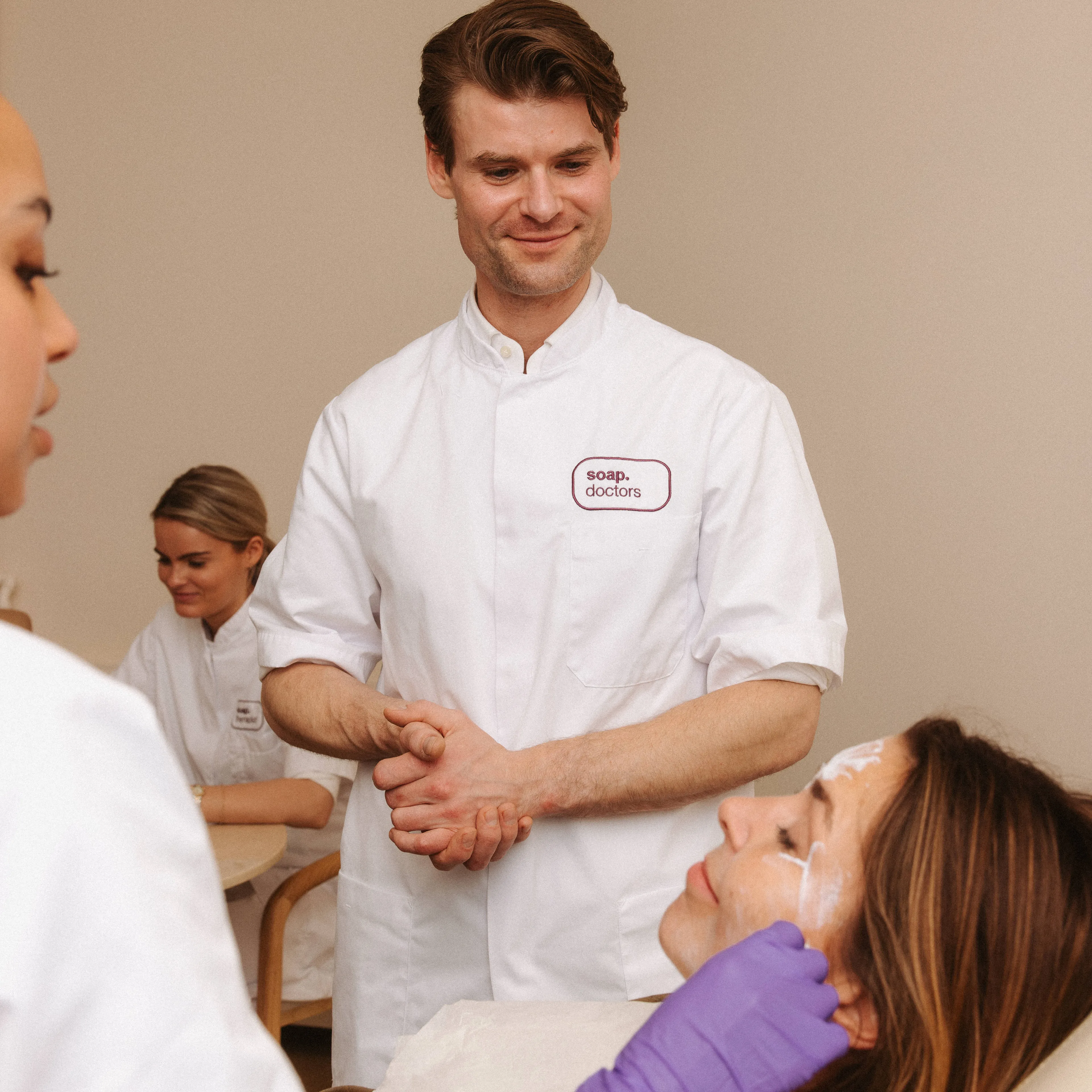
Een arts overlegt met een collega, terwijl op de achtergrond een behandeling plaatsvindt.

KNOW THE DIFFERENCE

The difference between jaw clenching and teeth grinding

Both fall under bruxism, but they behave differently. Clenching is static: you apply force without moving, mainly during the day and while awake. Grinding is dynamic: you slide your molars over each other, almost always while you sleep. That difference also determines what you notice.

Because clenching involves no rubbing movement, your teeth are relatively spared and the dentist doesn't see the damage. The muscle, however, takes the full brunt. People who clench therefore have muscle pain and headaches more often than dental problems. Many people do both, by the way. Do you also recognise morning stiffness or worn surfaces? Then read more about teeth grinding.

Een schap met huidverzorgingsproducten bij Soap.

PILLS OR PATTERNS?

What magnesium does and doesn't do

Magnesium plays a role in how muscles contract and relax again, and with a proven deficiency, supplementing can reduce muscle cramps. That is where the popularity of magnesium for jaw complaints comes from, and it is a logical thought. What is missing is convincing research showing that magnesium actually reduces jaw clenching in people without a deficiency.

So our advice is honest and not very spectacular: magnesium is safe in normal doses and you are welcome to try it, but don't expect it to solve the problem. The same nuance applies to a bite splint. It protects your teeth very well, but it doesn't lower the force with which you clench, and with jaw clenching it is precisely that force that is the problem.

WE KNOW BEST

The go-to place for injectables, surgery, skin therapy, beauty, and medical weight loss.

signature-laser-facial-spcf
  • Our team of cosmetic doctors, surgeons, skin therapists, and beauty specialists is ready to assist you every day with personal advice and treatments, fully tailored to your wishes and the best

THE USUAL SUSPECTS

Why you clench: stress, posture and habit

  • Concentration and stress. The most common trigger. Your jaw tenses along with effort, deadlines or tension you can't let go of.

  • Screen posture. Head forward, shoulders up, neck tense: that chain pulls your jaw along and keeps it closed.

  • Habit forming. Clenching is learned behaviour. Over time your jaw does it automatically, even when the tension is gone.

  • Medication and substances. Some antidepressants, caffeine, nicotine and recreational drugs demonstrably increase the chance of clenching.

  • Teeth that don't close properly. A crown that sits just too high or a missing molar makes your jaw search for a hold.

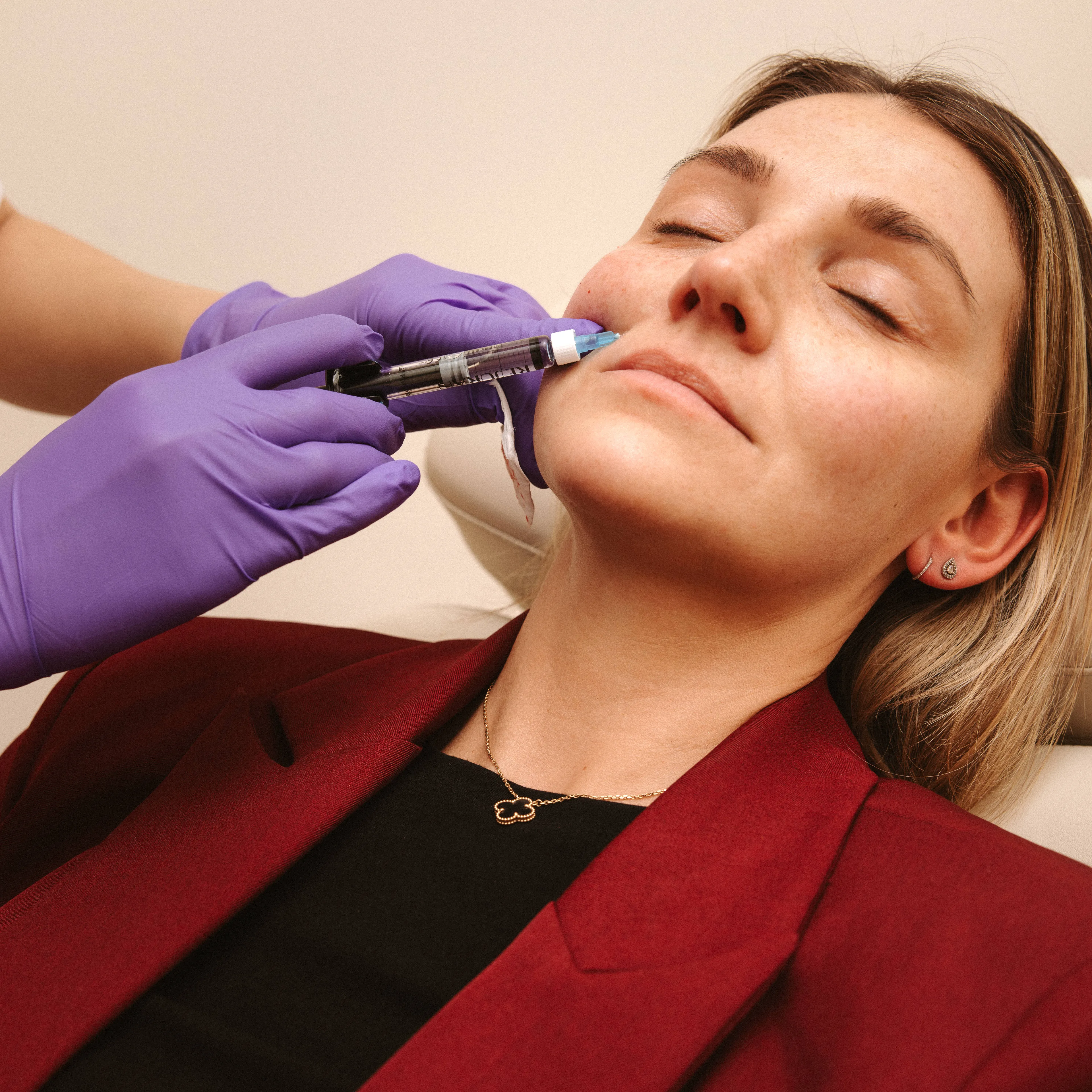
Een arts van Soap plaatst een injectie bij de mondhoek van een cliënte.

SOFTEN THE FORCE

How Soap takes the force out of your jaw muscle

During the free consult, the doctor asks you to clench and feels how strongly your masseter has developed. They ask about your daily rhythm, when the symptoms come up and whether there are signs at night as well. That determines how many units are needed and exactly where they should go.

The treatment itself takes 15 to 20 minutes: a few injections with a fine needle on both sides, just above the angle of your jaw. You can carry on with your day straight away. Important to understand: your jaw keeps working normally and you can chew as usual. What changes is the upper limit of the force you can unconsciously put into it.

RESULTS RESULTS RESULTS

How quickly you notice a difference

  • Build-up. The effect starts after a few days and reaches full strength after one to two weeks. On the first day you usually don't notice anything yet.

  • Result. A less tired, less stiff jaw at the end of the day, and for many people less pressure around the temples and ears.

  • Longevity. Three to four months on average. If you repeat the treatment, the muscle gradually becomes less bulky and the effect often lasts longer.

  • A habit is still a habit. The treatment lowers the force, but doesn't teach your jaw to stop clenching. Awareness and posture remain necessary.

REVIEWS

What clients say about Soap

August 14, 2024

Kliniekervaringen

"I was a bit nervous for my first ever go at botulinum toxin in my elevens/frown area, but the experience couldn't have been better. A quick and painless injection after a nice chat with the doctor. Now it's only three days later and I'm already loving the results: I look and feel fresher and nearly frown-free."

Amber
March 8, 2026

Kliniekervaringen

Super satisfied with my treatment. I specifically went after Sven because I have so much confidence in his expertise - and that was absolutely the right choice. The result is natural and exactly as I hoped!

Laura

March 7, 2026

Google

Was here last week for a follow up after my first treatment and I have to say, the consistency in the level of care here is impressive. Every staff member I've spoken to has been knowledgeable, friendly, and never makes you feel rushed. The clinic itself is beautifully designed - calming without feeling clinical. I've recommended soap to multiple friends already and will continue to do so. Worth every euro.

Mirjam

January 26, 2026

Google

Reception was really great! Very nice host. Julia gave me a very nice treatment. Just a little different than your regular facial. Loved it!! 🫶🏼

Nina

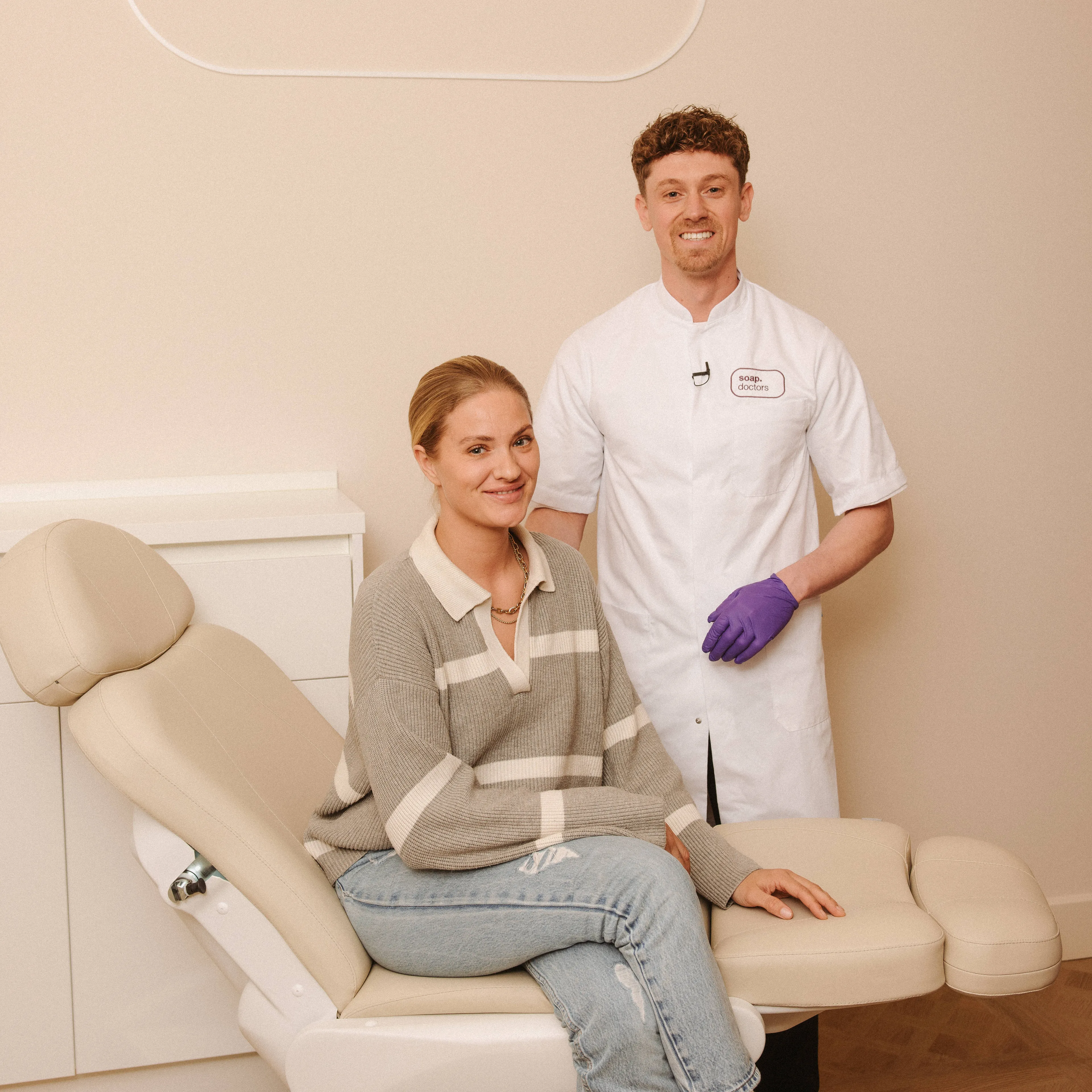
Een arts van Soap en een cliënte lachen samen in de behandelkamer.

CLEAR PRICES, NO SURPRISES

The costs of a jaw treatment

A treatment of the chewing muscles at Soap starts from €285. How many units are needed depends on how strongly your masseter has developed. During the free consult you get a concrete quote, before you decide anything.

See the full price overview for botulinum toxin for all zones and combinations. A treatment at a cosmetic clinic is not reimbursed by your health insurer, not even when the reason is medical.

YOUR SOAP PLAN

How to break the clenching pattern

Jaw clenching is partly habit and partly muscle strength. Work on both, and the result lasts longest.

  • Make it conscious. Stick a sticker on your screen or set a reminder: check your jaw position, let your teeth part, tongue against your palate.

  • Work on your posture. A higher screen and relaxed shoulders take the pull out of the chain between neck and jaw. A physiotherapist can give you targeted guidance here.

  • Have your teeth checked. A dentist or gnathologist assesses whether your bite plays a part and whether a custom-made bite splint makes sense.

  • Is your chewing muscle hard and painful? A treatment of the chewing muscle with botulinum toxin lowers the force with which you can clench, giving the muscle room to recover.

  • Does your headache go beyond your jaw? Then read more about tension headache.

DARE TO ASK

Frequently asked questions about jaw clenching